Many parents put off discussing their child’s disability diagnosis, hoping to shield them from stress. However, experts agree: a child should learn about their condition from their closest family members, in a safe and calm environment.
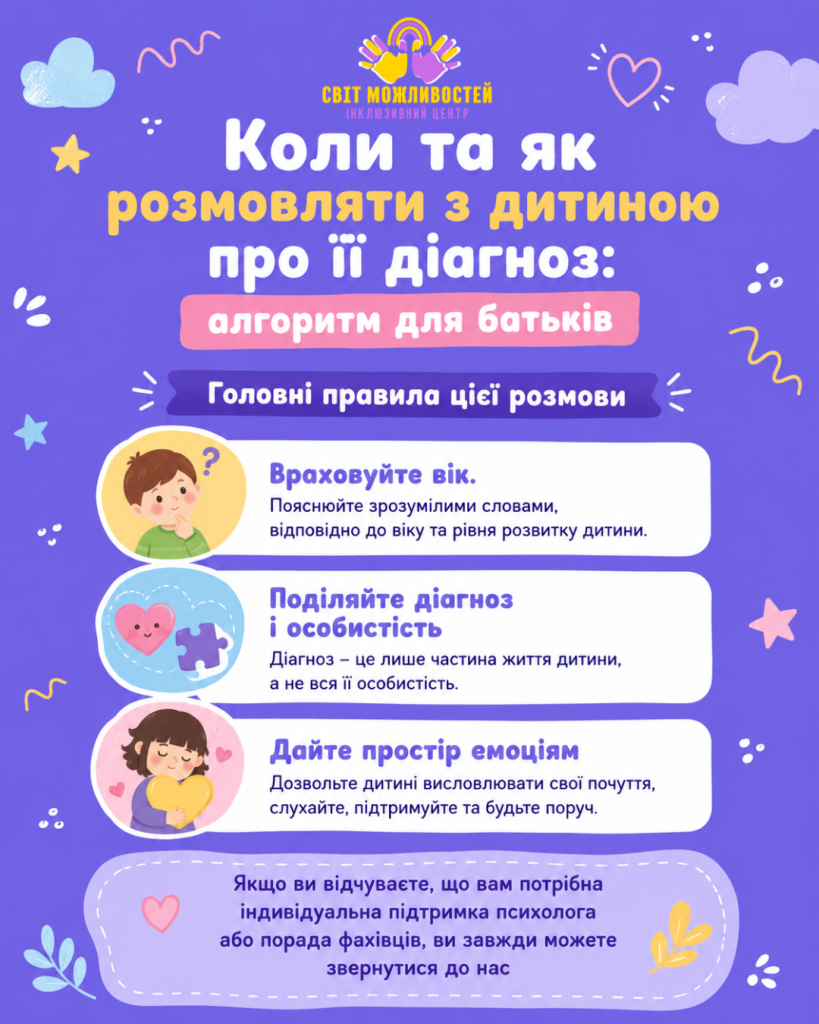
Key guidelines for this conversation:
Consider their age. Preschoolers don’t need medical jargon. Simple analogies are enough: “Your legs work a little differently, so we need this wheelchair/these exercises.” For teenagers, the facts and the name of the diagnosis are important.
2. Speak in a neutral tone. The child picks up on your emotions. If you talk about it with tears and despair, they will see themselves as a “problem.” Talk about their differences calmly, as if they were a personal trait (like eye color or being left-handed).
3. Separate the diagnosis from the person. Emphasize that autism, Down syndrome, or cerebral palsy is just a physical characteristic, but it doesn’t define who the child is inside. They remain cheerful, talented, and loved.
4. Allow room for emotions. The child has the right to feel sad, angry, or to ask, “Why me?” Be there for them, hug them, and validate these feelings.
Remember that you are not alone in facing these challenges. The team at the “World of Opportunities” Inclusive Center is ready to support your family every step of the way!