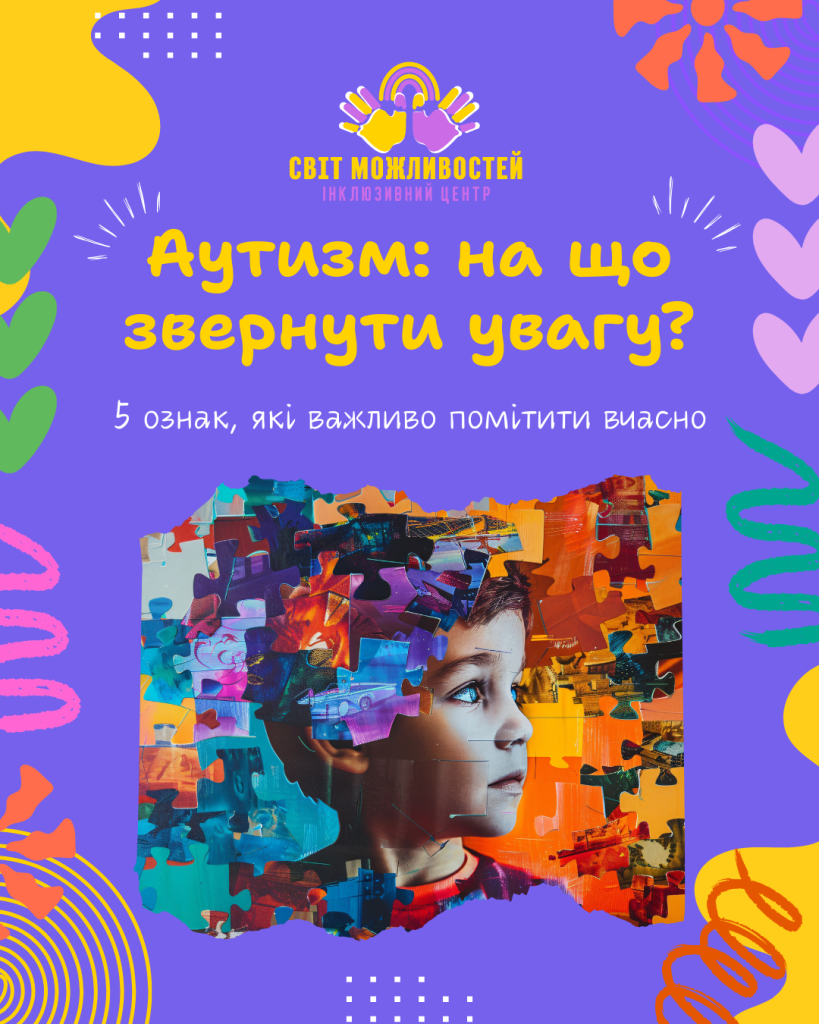
“He’s just so calm,” “She’ll start talking later,” “Boys always develop more slowly”—these are phrases parents often hear when they try to share their concerns. But you know your child best.
Early-onset autism isn’t about “strange” behavior, but about a different way of perceiving the world. It’s when a child doesn’t make eye contact not because they don’t want to, but because that contact is too intense for them. When they don’t respond to their name not because of hearing problems, but because their focus works differently. Early signs of autism spectrum disorder (ASD) can appear as early as 12 to 24 months of age.
At the “World of Opportunities” Inclusive Center, we identify key indicators that require professional attention:
The presence of a single symptom is not grounds for a diagnosis, but it is a reason to seek professional consultation.