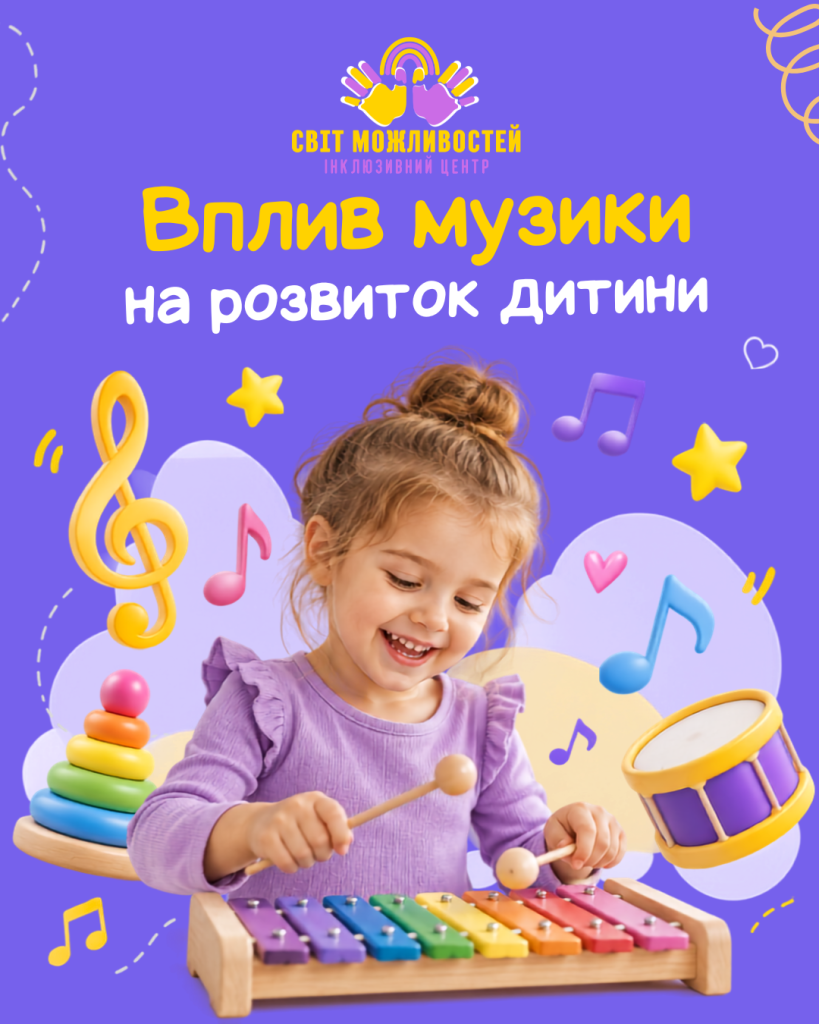
Music isn’t just a pleasant way to spend time. It can be a wonderful tool for a child’s development and help them explore the world around them
1. Develops auditory attention
Children learn to listen and distinguish between sounds, rhythms, and their volume.
2. Trains memory and thinking
Songs, repeating melodies, and rhythmic exercises help children memorize new information.
3. Supports speech development
Singing and repeating simple words and sounds promote the development of speech.
4. Improves coordination
Dancing, moving to music, and tapping out rhythms help coordinate movements and develop a sense of rhythm.
5. Helps express emotions
Music can create feelings of joy, calm, and security, as well as help a child express their emotions.
How can you use music at home?
Sing together, dance, repeat rhythms, play simple musical instruments, or simply listen to your child’s favorite songs.
The key is not to demand a perfect performance, but to turn music into an enjoyable shared activity.
At the “World of Opportunities” Inclusive Center, we use creative and play-based activities as part of children’s development, taking into account each child’s individual abilities and needs.